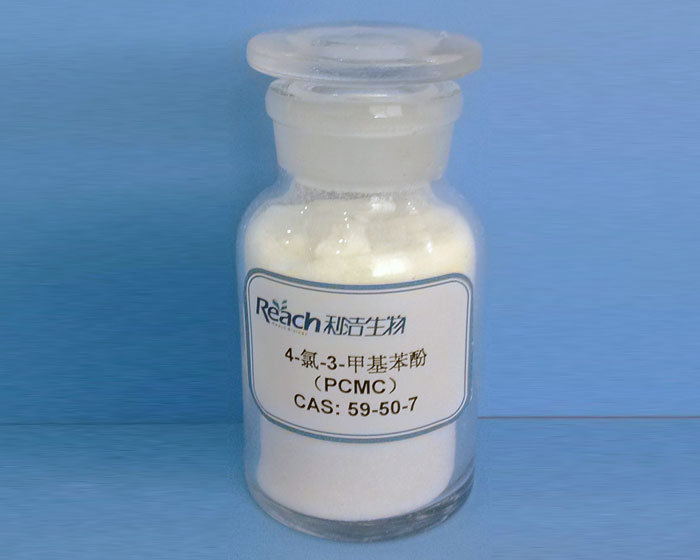
PCMC (4-Chloro-3-methylphenol)

PCMC Chemical Structure

1. Product Core Information

Product Name4-Chloro-3-methylphenol
Common Name/SynonymPCMC / Chlorocresol
Other Namesp-Chloro-m-cresol, 4-Chloro-m-cresol, Chlorocresol
Chemical Name4-Chloro-3-methylphenol
IUPAC Name4-Chloro-3-methylphenol; p-chloro-m-cresol
Molecular FormulaC₇H₇ClO
Molecular Weight142.58 g/mol
CAS Number59-50-7
EC Number200-431-6

2. Product Characteristics

PropertySpecification
AppearanceWhite to off-white crystalline powder or crystalline mass with characteristic phenolic odor
Antimicrobial SpectrumBroad-spectrum; highly effective against Gram-positive bacteria, Gram-negative bacteria, molds, and yeasts
Safety ProfileLow toxicity, non-irritating; negative in skin irritation tests; EU BPC approved for human hygiene disinfectants
StabilityGood heat resistance; stable at pH 1-14; steam-volatile
SolubilitySlightly soluble in water (4 g/L at 20°C); readily soluble in ethanol, ether, acetone, chloroform, and alkaline solutions
Physical & Chemical Data:
  • Boiling Point: 235°C (atmospheric pressure) / 236°C
  • Melting Point: 63-67°C (64-66°C)
  • Flash Point: 118°C
  • Density: 1.37 g/mL (20°C)
  • Vapor Pressure (20°C): 0.08 hPa / 5.00×10⁻² mmHg
  • pKa: 9.55-9.6
  • Log Kow: 3.1

3. Quality Standards

ParameterSpecificationTest Method
AppearanceWhite or off-white crystalline powder or crystalline massVisual
OdorCharacteristic phenolic odorOrganoleptic
Purity (GC)≥98.0% (Technical) / 98.0%-101.0% (Pharmacopoeia Grade)GC
Melting Range63°C-67°C (64-66°C)Capillary Method
AcidityNot more than 0.2 mL of 0.01 mol/L NaOH (methyl red indicator)Acid-Base Titration
Clarity and Color of SolutionClear and colorless; if colored, not darker than reference solution Orange-2Colorimetric
Residue on Ignition≤0.2%Gravimetric
Acid Value4.0-6.0Titration
IdentificationIR spectrum matches reference; blue-violet color with ferric chloride test; white precipitate with bromine testIR Spectroscopy, Color Reaction
Note: Pharmacopoeia grade complies with Chinese Pharmacopoeia 2020 Edition Part IV. Technical grade meets enterprise standards.

4. Antimicrobial Activity (MIC Values)

MicroorganismMIC (mg/L)MicroorganismMIC (mg/L)
Aspergillus niger50Chaetomium globosum50
Aspergillus flavus50Bacillus subtilis50
Aspergillus versicolor50Bacillus megaterium50
Penicillium citrinum50Escherichia coli250
Paecilomyces variotii10Pseudomonas fluorescens100
Cladosporium cladosporioides50Staphylococcus aureus50
Note: PCMC shows excellent inhibition against Paecilomyces variotii with MIC of only 10 mg/L

5. Applications

5.1 Personal Care & Cosmetics
  • Skincare: Face creams, lotions, baby care products (0.1%-0.2% concentration)
  • Hair & Body Care: Shampoos, shower gels, disinfectant soaps, hand washes
  • Color Cosmetics: Lipsticks, eye shadows, foundations
  • Maximum Permitted Concentration: 0.2% (w/w); prohibited for products contacting mucous membranes
5.2 Pharmaceutical Applications
  • Pharmaceutical Preservative: Injections, eye drops, nasal drops, and other liquid preparations (0.1%-0.2%)
  • Veterinary Medicine: Oral/injectable veterinary drugs and topical formulations
  • Medical Device Disinfection: Surgical instruments and medical supplies
  • Skin Care: Wound cleansing preparations, antiseptic products, nasal care vaporizers
5.3 Industrial Preservation
  • Metalworking Fluids: Cutting fluids and coolants (prevents microbial degradation and extends service life)
  • Coatings & Paints: Antifungal and antibacterial properties to prevent mold on paint films
  • Adhesives & Inks: Prevents colloidal contamination
  • Leather Processing: Antifungal and antibacterial treatment
  • Wood Protection: Preservative and insect-resistant treatment
  • Textiles & Paper: Fabric mildew prevention and pulp preservation
  • Rubber Industry: Antioxidant
  • Concrete & Building Materials: Additive preservation
5.4 Agriculture & Animal Husbandry
  • Environmental Disinfection: Poultry and livestock farm disinfection
  • Hospital & Household: Environmental cleaning and disinfection
6. Regulatory Compliance & Safety

Certification/RegulationDetails
EU BPC ApprovalApproved in 2016 as active substance for PT-1, PT-2, PT-3, PT-6, and PT-13 biocidal products; approval valid until May 1, 2028
Chinese PharmacopoeiaListed in Chinese Pharmacopoeia 2020 Edition Part IV as pharmaceutical excipient preservative
Cosmetics RegulationTechnical Safety Standard for Cosmetics 2015 Edition: Maximum concentration 0.2%, prohibited for mucous membrane contact
US EPARegistered as antimicrobial pesticide; currently under re-registration process
Toxicity Data:
EndpointValue
Acute Oral LD₅₀ (Rat)1830-2810 mg/kg (Low toxicity)
Acute Dermal LD₅₀ (Rat)>2000 mg/kg
Skin Irritation (Rabbit)Non-irritating
Eye Irritation (Rabbit)Corrosive (protective measures required)
SensitizationSkin sensitizer Category 1B
Aquatic ToxicityHarmful to aquatic organisms (WGK 2)

7. Usage Guidelines & Formulation Recommendations

Solubilization:
Recommended Dosage:

8. Packaging & Storage

Packaging: 25kg fiber drum (PE-lined) / 20kg iron drum / 1kg aluminum foil bag
Storage: Cool, dry place (≤25°C); sealed, protected from light; away from strong acids, strong bases, and oxidizers
Shelf Life: 36 months (unopened)
Transport: Handle as general chemical; load/unload carefully to prevent package damage

9. Key Advantages

Copyright © Hunan Lijie Bio Group Co., Ltd. All Rights Reserved  湘ICP备14008251号-1   Powered by Shixin Web Solutions